Checked against Kyoto City Transportation Bureau, JR West, the museums' and temples' own sites and Kyoto's tourism office in October 2026.
- Subway and lifts
- Both subway lines (Karasuma and Tozai) have a lift from platform to ticket gate at every station. The one gap is the transfer between Shijo and Hankyu Karasuma, which only has a stair lift (a new lift is due by spring 2027), so with a stroller you go up to street level and back down.
- City buses
- Buses are how you reach most temples. Only buses with the stroller symbol take a stroller: park it in the stroller space facing the back, brakes on, and use the bus's safety strap. The space can be taken, and buses to Kiyomizu, Gion and Ginkaku-ji get packed in peak season, so take the subway or a taxi when you can. At weekends the EX100 sightseeing express runs from Kyoto Station to Kiyomizu, Gion, Heian Shrine and Ginkaku-ji (¥500).
- Fares for kids
- On the city subway and buses, babies under 1 ride free, and children aged 1 to 5 ride free with a parent; from 6 to 11 they pay half. A Subway and Bus 1-Day Pass costs ¥1,100 (children ¥550); the bus-only day pass no longer exists.
- From the airport
- From Kansai Airport (KIX), the Haruka limited express reaches Kyoto Station in about 75 minutes and has a luggage area; with the WEST QR HARUKA ticket for overseas visitors it's ¥2,200 (children ¥1,100). The airport limousine bus takes about 90 minutes. From Itami (ITM), the limousine bus to Kyoto Station takes about 50 minutes.
- Taxis and car seats
- Japanese law exempts taxis from the child-seat rule, so most taxis won't have one. A private transfer from Kansai Airport can bring one: the transfer in our Travel Essentials box includes one child seat if you ask in advance.
- Baby rooms
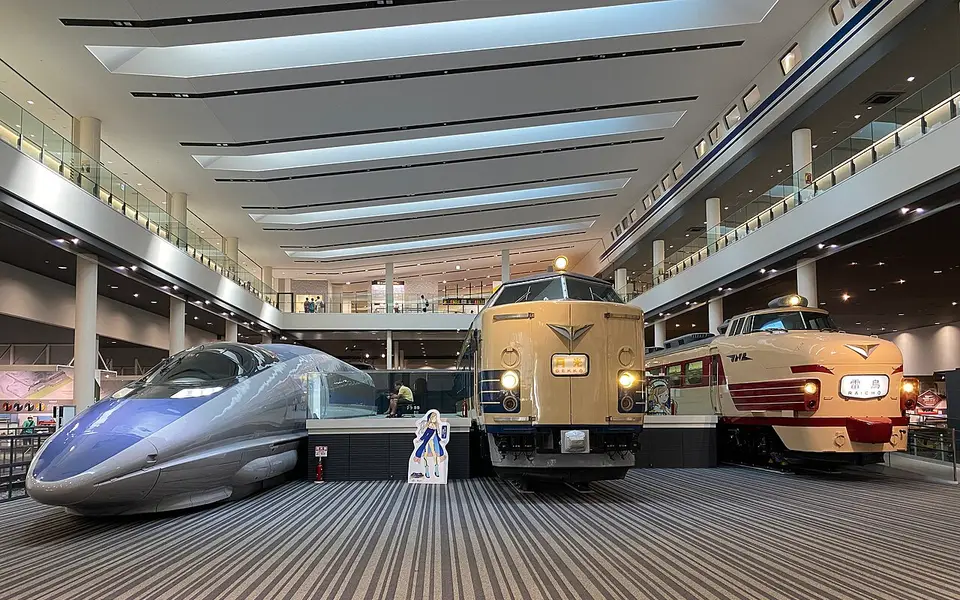
- The Railway Museum, the aquarium and Nijo Castle have nursing rooms. Since April 2025, Higashiyama, Kokusai Kaikan, Kitayama, Karasuma-Oike and Keage subway stations have free 'mamaro' baby-care pods (7:00–20:00). Kyoto Prefecture's Mamoppu map lists nursing and changing spaces.
- Pavements and temples
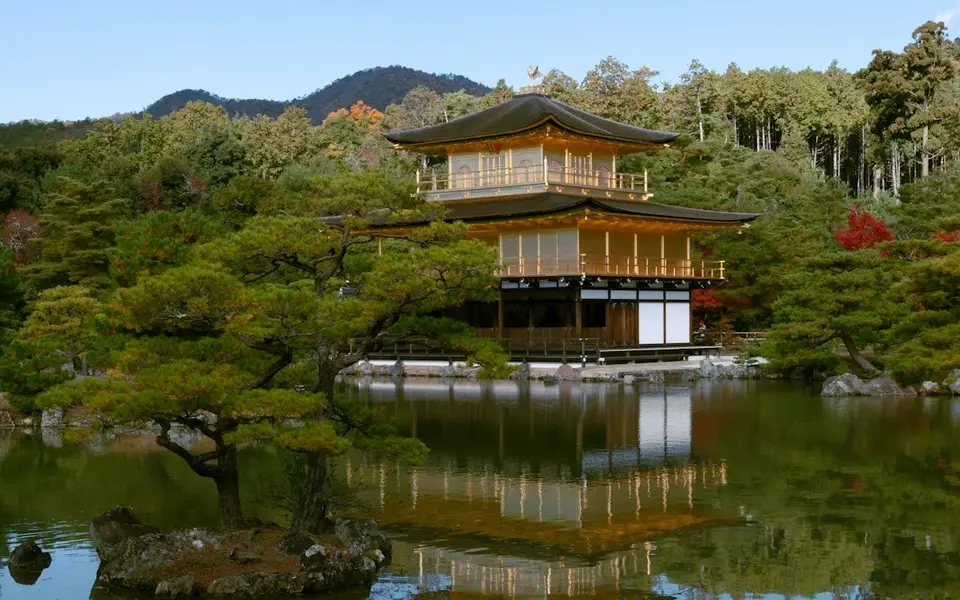
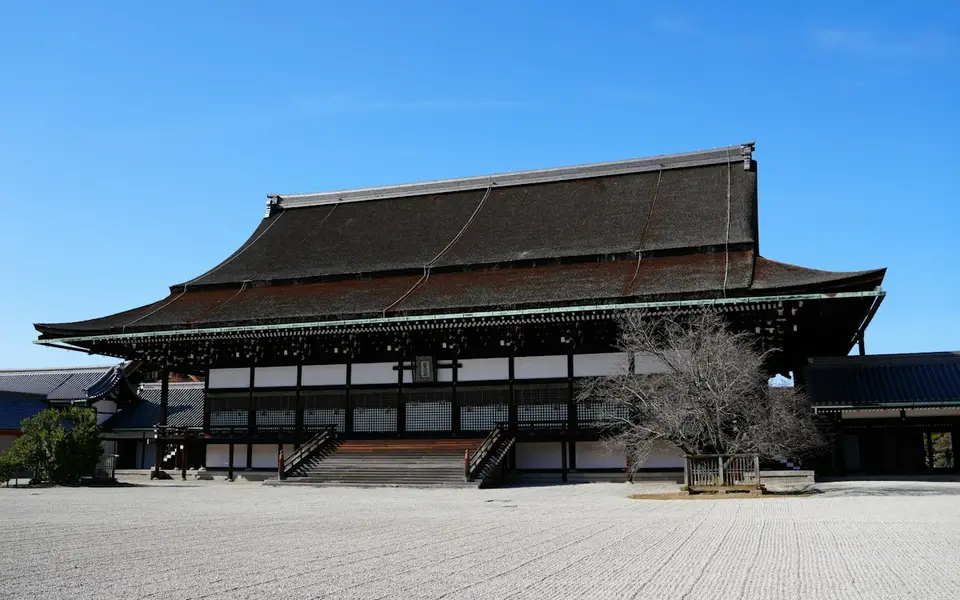
- The centre is a flat grid, but temple grounds are often gravel (Kinkaku-ji, the Imperial Palace, Heian Shrine's courtyard), and Kiyomizu-dera is up a long, steep, stone-paved slope (taxis can drop you at the top). The Philosopher's Path is uneven stone blocks, with a firmer small street a few metres away. In Gion, the private lanes are closed to tourists.
- Weather and crowds
- July and August average highs are around 32–34°C and humid; the 2026 rainy season ran from about 2 June to 9 July. Cherry blossom (late March to mid-April) and autumn leaves (November) bring the biggest crowds: go out early.


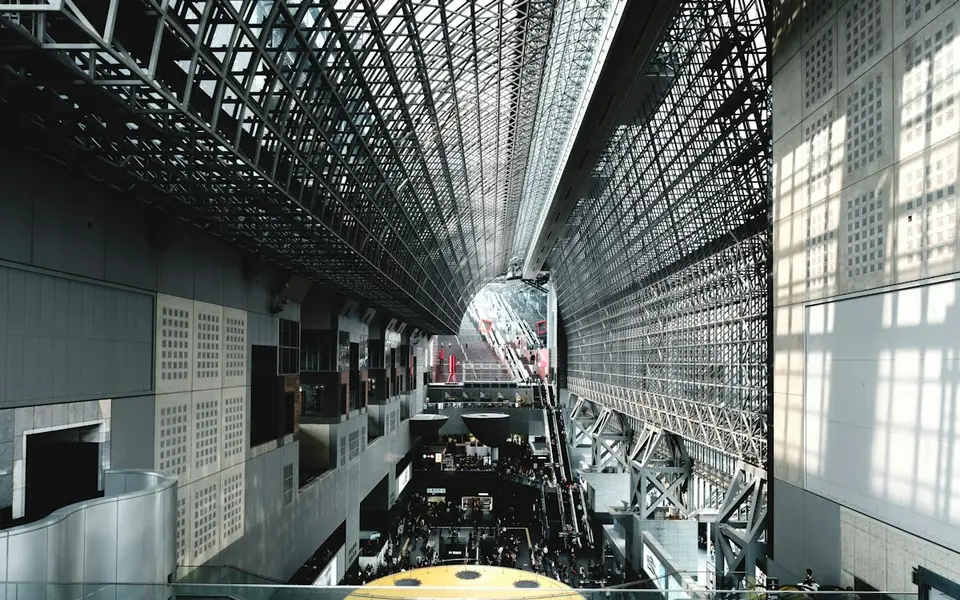
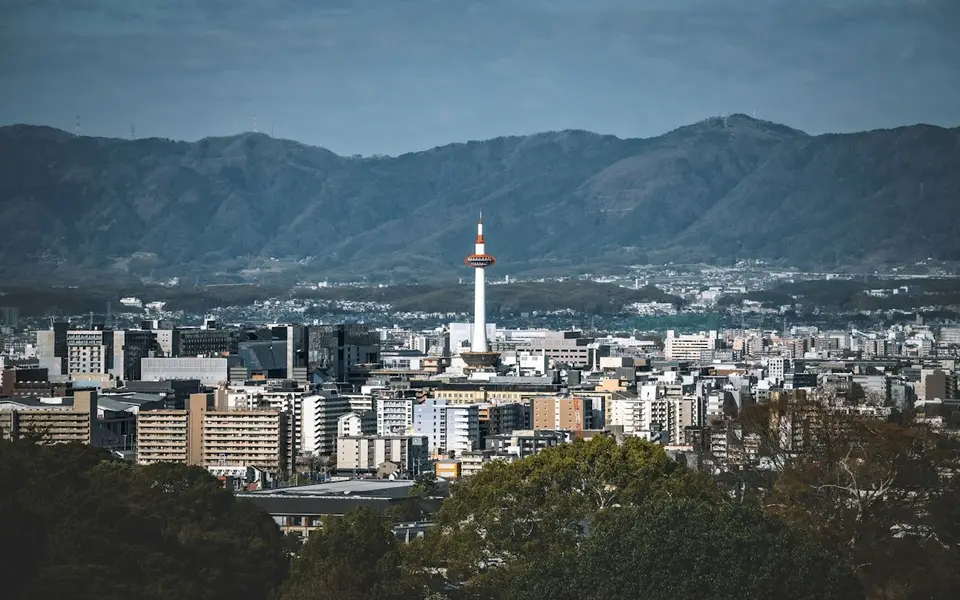 Kyoto Station area